Platform Risk: When Stripe or Wise Can Break You
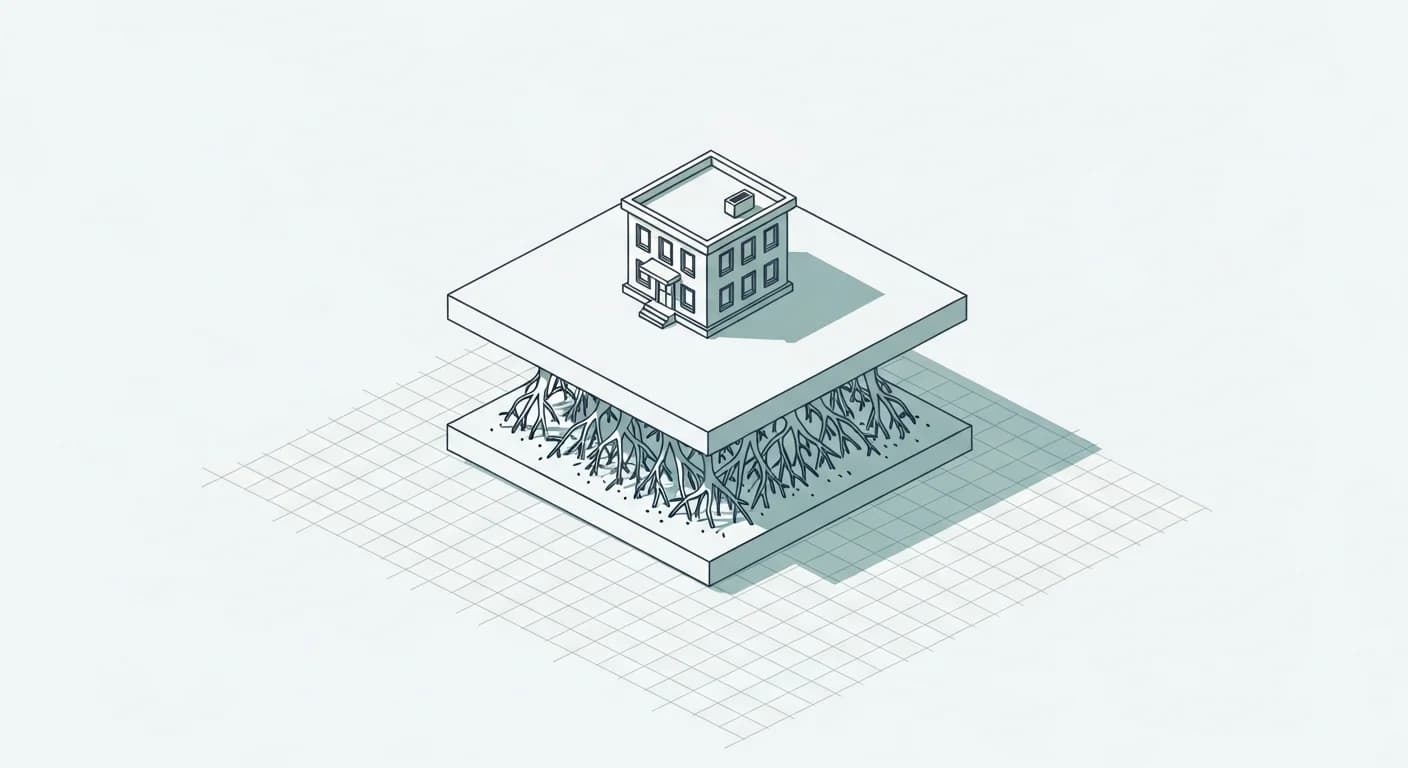
Stripe shows revenue flowing, but between that revenue and your bank sits an unmapped structure. When it breaks, income stops without warning.
Some links on this page go to partners who compensate us. This does not affect our analysis or rankings. How we make money
If your income arrives through Stripe, a marketplace, or a payment aggregator, you probably feel stable. Revenue is growing, payouts are regular, clients are global.
I felt the same way running cross-border businesses for twenty years. Payment rails feel like infrastructure right up until they stop working. Then you realize they're third-party services controlled by entities with their own risk models, regulatory pressures, and commercial interests.
Most platform-dependent founders have never mapped the structure between their revenue and their bank account. Here are five patterns that surface repeatedly in structural diagnostics.
1. Single-rail dependency is not the same as revenue concentration
When one payment processor handles the majority of your revenue, your cash flow depends entirely on that processor's policies, compliance posture, and risk tolerance. Your Stripe dashboard is not a structure explains why this matters more than most founders think.
Revenue concentration tells you where income comes from. Structural dependency tells you what breaks if the rail pauses, reviews, or terminates your account. One is a metric. The other is an existential risk.
Financial statements won't show this. It only becomes visible when you map it against your entity structure, documentation readiness, and jurisdictional footprint.
2. Freezes happen in hours, but switching takes months
Switching processors or adding redundancy takes weeks to months. The Stripe vs. Paddle vs. Lemon Squeezy comparison maps what that process involves. A freeze happens in hours.
That timing gap is the killer. Everything works smoothly until it doesn't, and by then your response window has shrunk to a fraction of your preparation window.
I've watched founders learn about redundancy the hard way, only after a freeze. By then options are limited and panic drives bad decisions. The mechanics of how freezes cascade from frozen funds to missed payroll to damaged reputation are worth understanding while things are still calm.
How does your structure score?
Free 2-minute screening across Money, Entity, Tax, and Accountability.
3. Being compliant won't save you
Most founders assume compliance means protection. It doesn't. Fully compliant accounts get reviewed, held, and terminated without explanation all the time.
Payment processors run risk scoring systems you can't see. Transaction patterns, business category, geography, refund rates, chargeback history all feed into models you have no visibility into and no ability to influence. Stripe's Restricted Businesses Policy and PayPal's User Agreement both grant broad discretion to hold or terminate accounts.
Even long-standing accounts get closed when the processor's risk model shifts or a single transaction trips a flag. You're playing on someone else's field, under rules they can change at any time.
4. Cross-border income creates obligations you're probably not tracking
If you earn from clients in multiple countries, you may have created tax obligations in jurisdictions you've never thought about. Platform income across multiple countries maps the specific questions: 1099-K thresholds, VAT obligations, reporting gaps. These intersect with permanent establishment risk and tax residency determination in ways your payment dashboard will never show you.
The platform collects from the customer. You receive a payout. Clean and simple. But the underlying transaction may carry implications in three jurisdictions at once: the customer's, yours, and the platform's. How cross-border income gets classified explains what actually happens beneath that clean payout.
This footprint exists whether you track it or not. Platform records describe transactions. They don't describe your structure, your entity's relationship to those transactions, or your obligations arising from them. The banking redundancy guide covers a three-layer approach so no single platform failure halts everything.
5. "It works" is not the same as "it's structured"
The most common pattern I see: everything functions. Revenue comes in. Taxes get filed. Nothing has gone wrong. So what's the problem?
The problem is that "functioning" and "structured" are different things. A payment flow that works fine today can sit on top of unresolved questions about entity boundaries, income classification, and jurisdictional obligations.
Those questions stay dormant until someone asks about them. A platform during a compliance review. A bank during an account inquiry. A tax authority during an audit. If the answers aren't clear, that's when the documentation gap between what you see and what authorities see becomes expensive.
What these patterns share
None of these are emergencies. None require immediate action.
But they share a common thread: the cost of mapping your structure before something breaks is a fraction of rebuilding it after.
Payment rails are not neutral infrastructure. They're controlled by third parties, governed by policies you didn't agree to, and subject to changes you can't predict. Knowing where you're exposed is the closest thing to preparation that exists. For a practical starting point, the Mercury vs. Wise vs. Relay comparison covers banking options that address some of these dependencies.
References
- Stripe — Restricted Businesses Policy and Connected Account Agreement
- PayPal — User Agreement
- Wise — Terms of Use
- IRS — [Foreign Bank Account Reporting (FBAR)](https://www.irs.gov/businesses/small-businesses-self-employed/report-of-foreign-bank-and-financial-accounts-fbar)
- OECD — Permanent Establishment Definition
Visual: Platform Dependency Cascade
| Stage | Detail | Risk |
|---|---|---|
| Stripe Account | 100% of Revenue | High |
| Revenue Collection | Stops | — |
| New Payments | Blocked | — |
| Payouts | Held | — |
| Linked Processors | Trigger Reviews | — |
| Client & Contractor | Payments Delayed | — |
| Next Bank/Processor | Asks About, Freeze History | — |
| Business Continuity | At Risk | High |
Frequently Asked Questions
What happens if Stripe freezes my account?
Payouts stop immediately. New charges may be blocked. The freeze can last days to weeks depending on the compliance review, and during that time your operational cash flow halts completely. You can't process payments, receive payouts, or in some cases access held funds until the review wraps up.
Is having one payment processor a problem?
Not inherently. It becomes exposure when the processor pauses, reviews, or terminates the account and there's no alternative rail to keep cash flowing. The risk scales with how much of your total revenue depends on that single processor.
Can a fully compliant account still get frozen?
Yes. Processors run internal risk scoring systems you can't see. Transaction patterns, business category, geography, refund rates, and chargeback history all feed into these models. Both Stripe's Acceptable Use Policy and PayPal's User Agreement grant broad discretion to hold or terminate accounts regardless of compliance status.
How do I reduce payment platform dependency?
Add a second payment processor. The Stripe vs. Paddle vs. Lemon Squeezy comparison covers what switching or adding a processor involves. The banking redundancy guide lays out a three-layer approach so no single failure shuts you down. Start before you need to: preparation takes weeks to months, but a freeze takes hours.
Does cross-border income through a platform create tax obligations?
It can. Income flowing through a platform may create obligations in three places: the customer's jurisdiction, yours, and the platform's. The platform records transactions but says nothing about your entity structure, the relationship between your entity and those transactions, or the obligations that follow. Classification depends on where revenue is generated and where services are performed.
Key Takeaways
- Single-rail dependency and revenue concentration are different things. One is a metric, the other is an existential risk to your entire operation.
- Full compliance won't protect you from freezes. Processors run opaque risk models and can hold or terminate accounts at their discretion.
- Platform income from multiple countries can create tax obligations in jurisdictions you've never considered, and your payment dashboard won't show them.
- A payment flow that works today can sit on top of unresolved structural questions that only surface when someone with authority starts asking.
Disclosure
*Mercury is a fintech company, not an FDIC-insured bank. Banking services provided through Choice Financial Group and Column N.A., Members FDIC.
META — Money
Money — Cash Flow & Banking — 11 articlesRelated Tools
Deep Dive
Platform Dependency Risk GuideRelated Articles
Amazon FBA Sellers with US LLC: Connection Risk, IRS Data Sharing, and Account-Linking Triggers (2026)
How Amazon links seller accounts, which W-8 a foreign-owned LLC gives, the Country of Establishment lock, INFORM Act verification, California's $800 LLC tax after Diet Standards, and Shopify Payments' SSN/ITIN rule.
Bank, CPA, Stripe See Different Stories — Why?
Your bank, CPA, and payment processor each see a different version of your business. That inconsistency itself becomes structural risk.
Cross-Border Tax Audit: What Your Structure Actually Reveals
A cross-border tax audit maps where you live, earn, and register entities. If those don't align, the audit finds the gap before you do.
Stripe Atlas vs Firstbase vs DIY: What's Included
Atlas $500, Firstbase $399, DIY $0 — what each formation service actually covers and the structural gaps none of them fill for non-resident founders.
How a Non-Resident-Owned US LLC Is Taxed (2026)
Two questions decide a non-resident's US tax on a single-member LLC: US trade or business, and income source. Plus Form 5472, 1040-NR, FDAP and treaties.
Summarize with AI

Cross-border entrepreneur running businesses across the US, China, and beyond for 20+ years. I built Global Solo to map the structural risks I wish someone had shown me.
Where does your structure have gaps?
Two free ways to map your cross-border risk — pick the depth that fits your time.
Structural Patterns
One blind spot, every two weeks. For entrepreneurs operating across borders.
Free LLC Formation Checklist included