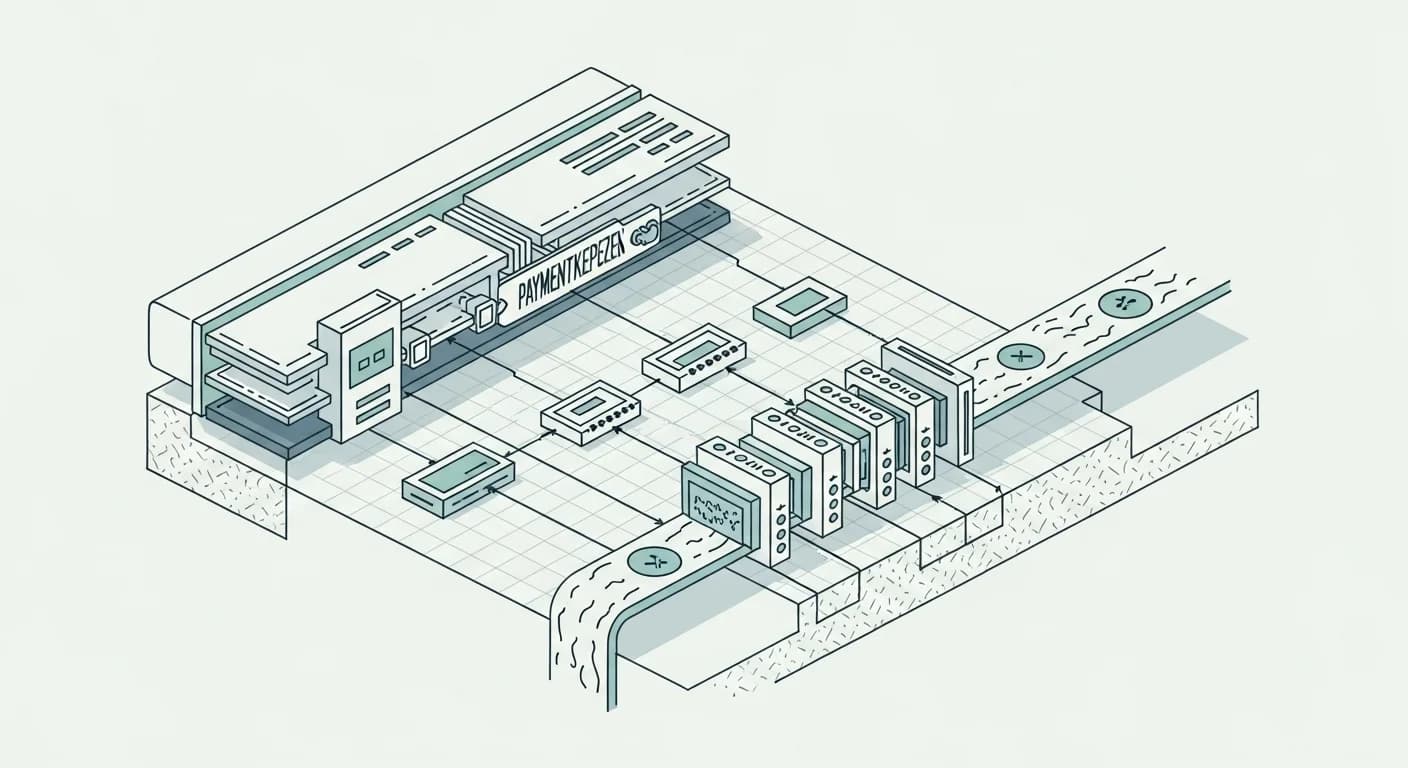
How Payment Freezes Actually Work
A payment freeze compresses your response timeline to hours while recovery takes weeks. The anatomy of what happens and why it escalates.
Key Takeaways
- Switching processors takes weeks to months while payment freezes happen in hours, creating a critical timing mismatch that compresses alternative-building timelines when systems...
- Payment freezes create cascading effects beyond the frozen amount, blocking new revenue collection and potentially damaging processor relationships that get recorded in industry...
- Payment freeze recovery spans weeks or months, and the psychological impact makes founders risk-averse in ways that constrain future growth even after funds are released.
- The gap between preparation time and event speed is inherent to payment rail dependency, making structure awareness before disruption the most accessible form of preparation.
Some links on this page go to partners who compensate us. This does not affect our analysis or rankings. How we make money
Most founders encounter payment rail decisions late — after revenue has already been flowing through a single channel like Stripe, PayPal, or Wise for months or years. This is the banking stability illusion in action — the account functions because nothing has triggered a review, not because the arrangement has been validated. By the time the structure feels load-bearing, it is.
The pressure arrives in one of two forms: either a freeze has already happened and urgency is immediate, or there's a growing sense that something is fragile but no clear signal of when it might break.
Understanding how freezes work — mechanically, not emotionally — is a structural exercise.
The timing asymmetry
Switching processors takes weeks to months while payment freezes happen in hours, creating a critical timing mismatch that compresses alternative-building timelines when systems fail.
Switching processors or adding redundancy is a weeks-to-months process. A freeze happens in hours.
This mismatch between preparation time and event speed is the defining structural characteristic of payment rail dependency. The system functions smoothly right up to the moment it doesn't. And when it doesn't, the timeline for building alternatives is compressed far beyond the timeline that existed before the event.
There is also a distinction — often unclear in the moment — between a "hold" and a "termination." Both feel similar at first: access is restricted, communication is slow, and the path forward is ambiguous. But their implications for recovery differ significantly.
What triggers a freeze
Payment processors operate risk scoring systems — shaped by Bank Secrecy Act requirements and their own banking relationships — that are rarely visible to the account holder. Several factors feed into these models:
The type of business activity — certain categories face higher scrutiny regardless of compliance posture.
Geographic patterns — mismatches between the geography of customers, the business entity, and the founder tend to create friction. The non-resident banking fragility analysis maps how these geographic mismatches accumulate through structural drift.
Transaction patterns — size, frequency, seasonality, refund rates, and chargeback history all feed into risk scoring. Rapid growth in transaction volume without corresponding account history is a common trigger. Founders using platforms like Wise Business as a US bank account substitute face a different compliance profile than traditional bank account holders — not necessarily higher risk, but uncorrelated risk.
Account age — newer accounts face more scrutiny than established ones, even with identical activity.
What is typically outside the founder's control: changes in the processor's risk appetite (often driven by their own banking relationships), regulatory shifts in jurisdictions where the processor operates, and algorithmic flags triggered by patterns that resemble — but are not — fraudulent behavior.
How does your structure score?
Free 2-minute screening across Money, Entity, Tax, and Accountability.
The cascade effect
Payment freezes create cascading effects beyond the frozen amount, blocking new revenue collection and potentially damaging processor relationships that get recorded in industry databases like Mastercard's MATCH list.
A payment freeze does not only affect the funds in question. It affects the ability to collect new revenue, fulfill existing obligations, and maintain trust with customers and partners.
Funds in transit may become inaccessible during payroll deadlines, tax deadlines, or supplier payments. The operational pressure compounds in ways that extend far beyond the frozen amount.
Customers may not distinguish between "payment processor issue" and "business issue." A freeze that prevents refunds or delays fulfillment can damage reputation in ways that outlast the freeze itself. Founders whose entire revenue infrastructure depends on a single platform face compounded exposure — the structural risks of platform dependency extend well beyond the frozen funds.
And once a processor relationship ends — whether voluntarily or forced — it creates a record. That record may surface in future applications elsewhere. When different platforms see different stories about the same business, the friction compounds across every new application. Processors often share termination data through industry networks such as the MATCH list (Mastercard) and similar databases.
Recovery takes longer than expected
Payment freeze recovery spans weeks or months, and the psychological impact makes founders risk-averse in ways that constrain future growth even after funds are released.
Founders frequently underestimate how long recovery takes. Even when funds are eventually released, the process can span weeks or months. During that time, operational pressure compounds.
The distinction between having funds released and having full operational recovery is important. Even after a freeze resolves, the psychological and operational residue affects decision-making. Founders who experience a freeze often become risk-averse in ways that constrain future growth. For a practical framework on what to do in those first critical hours, see the structural diagnostic for frozen business accounts.
Early decisions about how revenue flows into the business tend to calcify. What started as a short-term arrangement becomes structural — and changing payment infrastructure later, when volume is higher and stakes are greater, is more complex and more disruptive than it would have been earlier. Founders relying on Stripe as their sole dashboard often discover this calcification only when it becomes a blocking issue. For a comparison of banking platforms that support redundancy, see Mercury vs Wise vs Relay.
Get structural patterns other founders miss
One blind spot, every two weeks. No spam.
Structure before urgency
The gap between preparation time and event speed is inherent to payment rail dependency, making structure awareness before disruption the most accessible form of preparation.
The cost of understanding payment rail structure feels abstract when nothing is wrong. It becomes concrete when something breaks.
This is not a call to action. It is a structural observation: the gap between preparation time and event speed is inherent to payment rail dependency. Awareness of that gap — before it becomes relevant — is the most accessible form of preparation. The compliance paradox maps why even fully compliant setups are not immune to freezes. The banking redundancy setup guide maps a three-layer approach to building failover before a disruption occurs.
Visual: Payment Freeze Cascade
| Stage | Detail | Risk |
|---|---|---|
| Initial Freeze | Event | High |
| Funds Frozen | Hours | High |
| New Revenue | Blocked | — |
| Payouts | Delayed/Held | — |
| Payroll & Tax | Deadlines at Risk, Days-Weeks | — |
| Customer Trust | Damaged | — |
| Linked Processors | Trigger Reviews | — |
| Processor Termination | Record Created, Permanent | High |
| Future Banking | Access Constrained | High |
Key Takeaways
- The defining structural characteristic of payment rail dependency is timing asymmetry: adding redundancy takes weeks to months, while a freeze happens in hours.
- Freeze triggers include business category, geographic mismatches, rapid transaction volume growth, and changes in the processor's own risk appetite — many outside the founder's control.
- A payment freeze cascades beyond frozen funds: it affects revenue collection, payroll and tax deadlines, customer trust, and platform relationships simultaneously.
- Processor terminations create a permanent record shared through industry networks; how that history is framed shapes future banking and processor access.
- Early payment infrastructure decisions tend to calcify — changing payment rails later, when volume is higher and stakes are greater, is more complex than it would have been earlier.
References
- FinCEN: Bank Secrecy Act — The regulatory framework that drives payment processor compliance obligations
- OCC: BSA/AML Compliance — Bank supervision standards that cascade to payment processor risk models
- FDIC: Deposit Insurance FAQs — What deposit insurance covers (and what account restrictions it does not address)
- Mastercard MATCH List Overview — Industry termination database shared across payment processors
META — Money
Money — Cash Flow & Banking — 15 articlesRelated Tools
Deep Dive
Platform Dependency Risk GuideRelated Articles
Business Account Frozen: A Structural Diagnostic
A business account freeze reveals structural gaps that existed long before the event. Diagnostic framework for what the freeze actually exposes.
Platform Risk: When Stripe or Wise Can Break You
Stripe shows revenue flowing, but between that revenue and your bank sits an unmapped structure. When it breaks, income stops without warning.
Canada-US Tax Treaty and LLC Income: What Changes in 2026
Proposed Section 899 could add withholding for Canadian-owned US entities. The treaty already has gaps for LLCs. Here is what the treaty covers and what it does not.
CRA and US LLCs: The Tax Classification Trap Canadians Face
The CRA treats US LLCs as corporations. The IRS treats them as pass-through. This mismatch creates effective tax rates of 50-75% for Canadian founders.
FEMA and RBI Rules for Indian Founders with US LLCs (2026)
LRS caps at $250K/year. ODI requires RBI approval. FEMA penalties reach 3x the violation amount. The compliance layer Indian LLC owners rarely see.
Summarize with AI

Cross-border entrepreneur running businesses across the US, China, and beyond for 20+ years. I built Global Solo to map the structural risks I wish someone had shown me.
Where does your structure have gaps?
7 questions. 2 minutes. See which of the four META dimensions need attention — free, no signup.
Free Risk CheckStructural Patterns
One blind spot, every two weeks. For entrepreneurs operating across borders.
Free LLC Formation Checklist included