Compliant But Account Frozen? Here's Why
Filed every form, followed every rule — and Stripe still froze your account. The gap between compliance and structural safety is where freezes happen.
Key Takeaways
- Payment processors use algorithmic risk models that score patterns across transaction history, geography, velocity, and dozens of other signals rather than simple compliance...
- Account tenure creates relative stability through established transaction patterns, but processors can still freeze long-standing accounts when their risk models shift due to...
- Processors flag accounts when transaction patterns don't match the original business description provided during setup, creating a "narrative gap" that shifts focus from compliance...
- Single-rail payment structures reduce operational costs but create total revenue collection failure when the sole processor fails, while diversification across multiple processors...
- Processors operate under compliance obligations that prevent them from disclosing specific triggers behind account holds, making founder requests for explanations go unanswered or...
There is a common assumption among founders: if the business is compliant, the payment processor will not freeze the account.
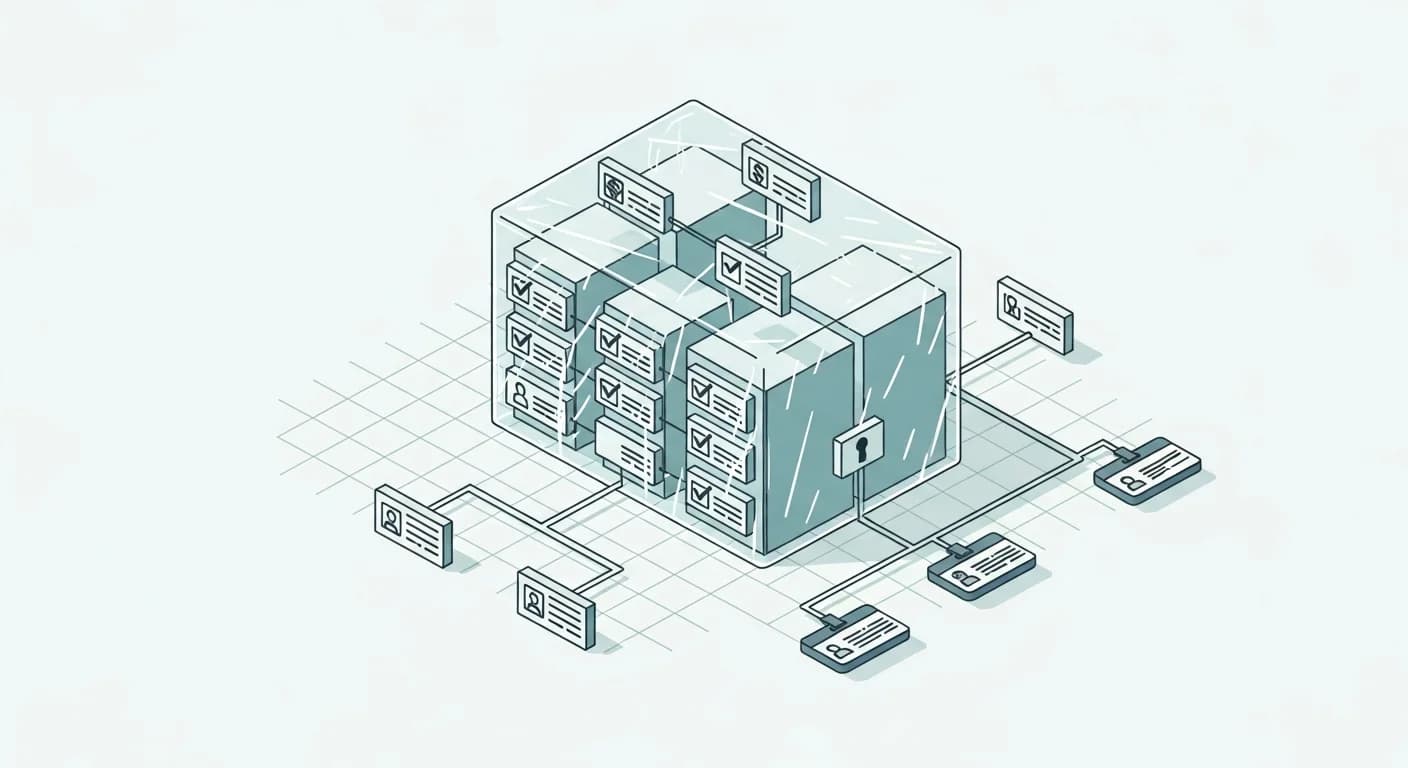
In practice, compliance and processor safety are different conditions. One is about following rules. The other is about how an algorithm interprets patterns. They overlap, but they are not the same thing — and the gap between them is where many freezes originate.
Compliance is about rules. Risk scoring is about patterns.
Payment processors use algorithmic risk models that score patterns across transaction history, geography, velocity, and dozens of other signals rather than simple compliance checklists.
Payment processors do not evaluate accounts against a compliance checklist. They evaluate accounts against a risk model — an algorithmic system that scores patterns across transaction history, business category, geography, velocity, refund rates, and dozens of other signals. The mechanics of how payment freezes actually work map this process in detail.
A fully compliant business can trigger risk flags. High average transaction values relative to the account's baseline. Cross-border transactions involving jurisdictions with elevated scrutiny. Business models that are difficult to categorize cleanly. Seasonal spikes that look, to an algorithm, like anomalous behavior.
The account holder cannot see the risk model. The processor is not obligated to explain it. This information asymmetry is structural, not incidental. The structural diagnostic for frozen accounts maps the four dimensions — money, entity, tax, accountability — that a freeze event exposes simultaneously.
Account tenure provides protection — until it doesn't
Account tenure creates relative stability through established transaction patterns, but processors can still freeze long-standing accounts when their risk models shift due to banking relationships, regulations, or commercial priorities.
There is a belief that long-standing accounts are safe. Account tenure does provide some protection. Established patterns create a baseline that new activity is measured against, and processors are less likely to flag accounts with extensive, consistent history.
But long-standing accounts can still be closed if the processor's risk model shifts — often driven by changes in the processor's own banking relationships, regulatory environment, or commercial priorities. For founders who have experienced a freeze, the post-notice clarity framework maps how to move from reactive fixes to structural understanding. These shifts happen without notice to the account holder.
The takeaway: account tenure creates relative stability, not absolute safety. The conditions that made the relationship stable may change through factors entirely outside the founder's control.
How does your structure score?
Free 2-minute screening across Money, Entity, Tax, and Accountability.
The narrative gap
Processors flag accounts when transaction patterns don't match the original business description provided during setup, creating a "narrative gap" that shifts focus from compliance to trust.
Processors increasingly look beyond raw compliance to narrative consistency. The way a business is described to a processor matters. Mismatches between declared activity and actual transaction patterns tend to trigger review.
This happens when the business evolves faster than the processor profile is updated. The account was set up for one type of activity. Revenue grew. Client geography expanded. Transaction patterns shifted. But the processor's understanding of the business still reflects the original description.
Once a narrative gap is identified, trust is difficult to rebuild. The processor's question is no longer "is this business compliant?" but "why doesn't the activity match what we were told?" The answer may be perfectly benign — the business grew — but the gap itself triggers scrutiny.
Simplicity is not safety
Single-rail payment structures reduce operational costs but create total revenue collection failure when the sole processor fails, while diversification across multiple processors and banking setups prevents this single point of failure.
A single, clean payment flow is easier to manage. It is also a single point of failure.
There is a structural tension between simplicity and resilience. Simple payment structures have fewer operational costs. They also have no redundancy. If the single rail fails, revenue collection stops entirely. This single-rail pattern is the defining characteristic of platform-dependent founders who discover their Stripe dashboard is not infrastructure.
The cost of diversification — maintaining relationships with multiple processors, managing multiple payout flows — feels disproportionate when nothing is wrong. A banking redundancy setup maps what structural diversification looks like in practice. Founders who use platforms like Wise Business as a US bank account substitute already have a second rail — but the question is whether it is configured as a functional backup or merely another container. The cost of not diversifying becomes visible only after something goes wrong.
This is not an argument for complexity. It is an observation about the relationship between structural simplicity and structural fragility. Both conditions exist simultaneously in a single-rail payment setup.
Get structural patterns other founders miss
One blind spot, every two weeks. No spam.
Expecting clarity during a freeze leads to frustration
Processors operate under compliance obligations that prevent them from disclosing specific triggers behind account holds, making founder requests for explanations go unanswered or receive only vague responses.
Processors are not obligated to explain their decisions. When a freeze occurs, the communication timeline is the processor's, not the founder's. Requests for information may go unanswered. Explanations may be vague or absent.
This is not malice. It is structural. Processors operate under their own compliance obligations, which may prevent them from disclosing the specific triggers or reasoning behind a hold. The founder's experience of opacity is a feature of the system, not a failure of communication.
When revenue has been flowing smoothly for months or years, it becomes easy to treat the current setup as stable. Stability and fragility coexist. The absence of problems is not evidence of structural adequacy — it is evidence that the structure has not yet been tested. This is the core observation behind the banking stability illusion — the account functions because nothing has triggered a review, not because the arrangement has been validated.
Seeing what compliance doesn't show
Structural visibility maps payment dependencies, geographic patterns, and narrative consistency across dimensions that compliance requirements alone do not address.
Compliance addresses legal requirements. Structural visibility addresses how the business is organized — payment dependencies, geographic patterns, narrative consistency, documentation completeness — across dimensions that compliance alone does not map.
Global Solo's META framework maps these structural dimensions for founders who want to see their position clearly, before someone else examines it under different conditions.
Visual: Compliance vs. Risk Scoring
| Stage | Detail | Risk |
|---|---|---|
| Tax Filings Current ✓ | — | |
| KYC Docs Submitted ✓ | — | |
| Terms Followed ✓ | — | |
| Result: Fully | Compliant | Low |
| Transaction Velocity | Spike Detected | — |
| Cross-Border Pattern | Matches High-Risk | — |
| Business Category | Ambiguous | — |
| Result: Risk Score | Elevated → Flagged | High |
| Compliance ≠ Safety | Information Asymmetry, Is Structural | Medium |
Key Takeaways
- Payment processors evaluate accounts against algorithmic risk models, not compliance checklists — a fully compliant business can still trigger a freeze.
- A "narrative gap" between declared business activity and actual transaction patterns triggers scrutiny — the processor asks "why doesn't the activity match what we were told?"
- A single payment rail is simultaneously a simple structure and a single point of failure; structural simplicity and structural fragility coexist.
- Processors are not obligated to explain freeze decisions; the information asymmetry between processor and account holder is a feature of the system, not a failure of communication.
References
- FinCEN: Advisories — Jurisdictional risk advisories that influence processor risk models
- FDIC: Deposit Insurance and Consumer Protection — Account holder rights and deposit insurance coverage
- OCC: Consumer Protection — Federal banking consumer protection standards
- FinCEN: Bank Secrecy Act — AML/KYC statutory framework that drives institutional compliance reviews
- CFPB: Filing a Complaint — Consumer Financial Protection Bureau complaint process for banking issues
- Stripe: Restricted Businesses — Stripe's prohibited and restricted business categories
META — Money
Money — Cash Flow & Banking — 15 articlesRelated Tools
Deep Dive
Platform Dependency Risk GuideRelated Articles
Cross-Border Tax Audit: What Your Structure Actually Reveals
A cross-border tax audit maps where you live, earn, and register entities. If those don't align, the audit finds the gap before you do.
FEMA and RBI Rules for Indian Founders with US LLCs (2026)
LRS caps at $250K/year. ODI requires RBI approval. FEMA penalties reach 3x the violation amount. The compliance layer Indian LLC owners rarely see.
SBP and FBR Rules for Pakistani Founders with US LLCs (2026)
State Bank controls forex. FBR taxes worldwide income. Pakistani LLC owners face dual compliance that most formation guides ignore entirely.
CRS Reports Your Accounts to China's STA (2026)
China's STA now receives account data from 100+ countries via CRS. 2025 started active enforcement. What overseas founders need to know.
Form 5472: The $25K/Year Penalty Most LLC Owners Miss
Foreign-owned US LLCs must file Form 5472 annually — even with zero revenue. The penalty is $25,000/year with no cap.
Summarize with AI

Cross-border entrepreneur running businesses across the US, China, and beyond for 20+ years. I built Global Solo to map the structural risks I wish someone had shown me.
Where does your structure have gaps?
7 questions. 2 minutes. See which of the four META dimensions need attention — free, no signup.
Free Risk CheckStructural Patterns
One blind spot, every two weeks. For entrepreneurs operating across borders.
Free LLC Formation Checklist included