IP Ownership Across Borders: The Assignment Gap
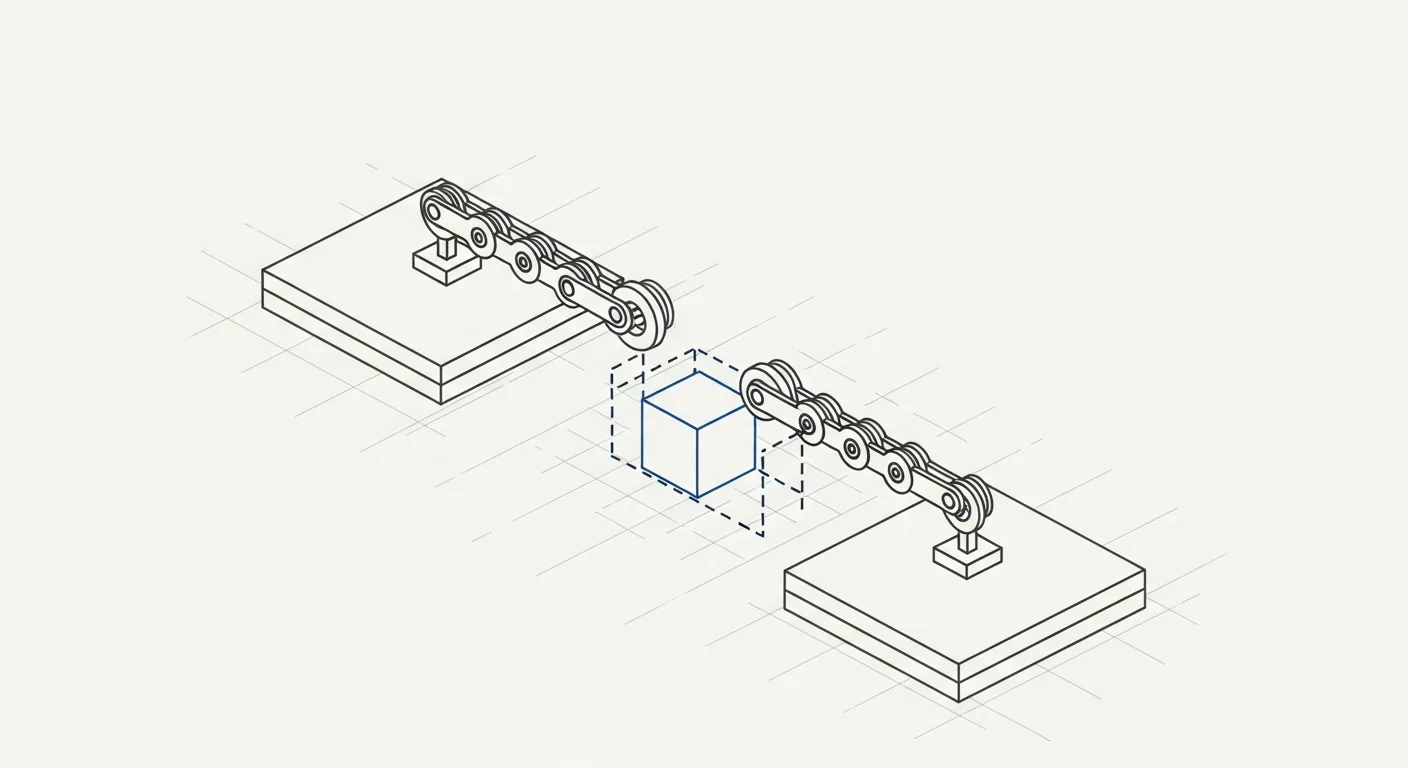
Built in Portugal, LLC in Delaware — who owns the IP? Without a formal assignment, the answer depends on which country's law applies.
Some links on this page go to partners who compensate us. This does not affect our analysis or rankings. How we make money
The Assignment Gap Most Founders Don't See Until It's Too Late
Here's a pattern I've watched play out more times than I'd like: a founder builds software in one country, registers an LLC in another, and assumes the company owns everything. No assignment agreement. No licensing paperwork. Just vibes.
The IP sits in legal limbo. The entity claims it, but under whose law? The developer's country says one thing. The LLC's jurisdiction says another. And nobody notices until a buyer's lawyer starts asking questions during due diligence.
Multi-Entity Structures Grow Messy
Nobody designs a multi-entity structure from scratch. You open a company here because that's where the bank account works. You add an entity there because a client requires a local invoice. Before long you have three entities across two continents and zero documentation connecting them.
IP ownership gets lost in that drift. The code lives on a laptop in Lisbon. The LLC sits in Wyoming. The holding company is in Singapore. Who actually owns the product?
The Holding Company That Claims But Doesn't Own
A holding company that "owns" IP without a signed assignment agreement owns nothing. It has a claim. Claims get challenged.
If the IP was created in Portugal by a contractor paid through a German entity, the Delaware holding company's assertion of ownership is just words on an org chart. No transfer agreement, no transfer. The gap widens as the IP gains value because that's exactly when someone has an incentive to dispute it. This is the same structural problem explored in the holding company that doesn't hold anything.
Different Countries, Different Default Rules
WIPO tries to harmonize IP protection across borders, but the gaps between jurisdictions are still enormous. Code written in Brazil, owned by a US LLC, and deployed from a server in Ireland triggers three different legal frameworks, each with its own default ownership rules.
Without a signed agreement that specifically addresses which jurisdiction's law governs, ownership stays ambiguous. And ambiguous means contestable. For founders weighing where to park their IP entity, the entity decision framework covers how jurisdiction choice affects IP positioning.
Contractor vs. Employee: Who Actually Owns What They Built?
This is where it gets ugly. The DOL and IRS each run their own classification tests, and every other country has its own version.
The default rule in most jurisdictions: contractors keep what they create. Employees don't. So if your "contractor" in the Philippines is actually an employee under Philippine law, your IP assignment clause might be fine. But if they're a true contractor and your agreement doesn't explicitly assign IP rights, they own the code they wrote for you.
I've seen founders shocked by this. They paid for the work, they directed it, they assumed ownership was automatic. It wasn't. See the full breakdown of cross-border classification risk.
Organic Growth, Missing Paperwork
Structures that grew reactively almost always have holes in their IP documentation. The founder added an entity for banking, another for tax residency, another because a partner insisted. At no point did anyone draft an IP assignment agreement between them.
The USPTO requires recorded assignments for patent ownership transfers. Most multi-entity founders haven't done this. If you have a patent sitting in a subsidiary that was never formally assigned to the parent, the parent doesn't own it on paper. And on paper is all that counts.
The Fix Is Boring. The Consequences of Skipping It Aren't.
The assignment gap isn't a sophisticated problem. It's a paperwork problem. But paperwork problems compound across jurisdictions until they become valuation problems, tax problems, and acquisition-killing problems.
Map which entity actually created each piece of IP. Then sign assignment agreements to move ownership where it belongs. Record those assignments where required. That's it. Authorities and acquirers examine what's recorded, not what was intended, and documentation gaps are the first thing they find.
How Assignment Gaps Create Tax Exposure
The tax hit is worse than the ownership ambiguity. When IP sits in an entity that didn't develop it and no formal transfer exists, you have a transfer pricing exposure that multiple tax authorities can attack independently.
Transfer pricing rules require related-entity transactions to happen at arm's length. If IP was developed in Portugal but claimed by a Delaware LLC with no documented transfer at fair market value, Portugal's tax authority can argue it's owed income for the asset creation. Meanwhile, the US may treat the IP as having zero cost basis, inflating taxable gains on any future sale or license.
Then there's royalty withholding. If the claiming entity licenses IP back to the entity where development happened, withholding obligations can arise in both countries. The IRS withholds on royalty payments to foreign persons, and most other jurisdictions do the same. Founders who assume a parent-subsidiary relationship resolves IP ownership often discover that withholding obligations were quietly accumulating for years before anyone noticed.
The Contractor Angle: Local Law Decides, Not Your Contract Template
In common law jurisdictions (US, UK, Australia), IP created by a contractor belongs to the contractor unless a written agreement says otherwise. The work-for-hire doctrine applies narrowly and usually doesn't cover software built by contractors.
Civil law jurisdictions play by different rules. In some, moral rights stay with the creator no matter what the contract says. In others, economic rights transfer automatically but only if specific statutory conditions are met.
A founder in the US who hires a developer in Germany and a designer in Brazil cannot use the same contractor agreement for all three. German law governs the German contractor. Brazilian law governs the Brazilian one. Without jurisdiction-specific assignment clauses, the founder's entity may not own the work it paid for.
This gap surfaces during due diligence. Acquirers and investors check IP assignment chains, and missing links directly reduce valuation. For US C-Corp founders, the gap also threatens QSBS eligibility: if the IP was never formally assigned to the qualifying corporation, the tax exclusion on exit may not apply. The cross-border exit planning playbook covers how these gaps translate into larger escrow holdbacks and reduced proceeds.
How does your structure score?
Free 2-minute screening across Money, Entity, Tax, and Accountability.
Visual: The IP Assignment Gap
| Stage | Detail | Risk |
|---|---|---|
| Developer | in Germany | — |
| Intellectual | Property | — |
| Developer Retains | Ownership | — |
| US LLC Claims | Ownership | — |
| Assignment Gap | High | |
| Transfer Pricing | Exposure | Medium |
| Royalty Withholding | Issues | Medium |
| Due Diligence | Risk in M&A | Medium |
Key Takeaways
- If IP was built in one country and your entity is in another, you need a signed assignment agreement. Without one, ownership is ambiguous and contestable.
- Contractors keep what they create by default. Employees don't. Get the classification right, then get the assignment in writing.
- A holding company without formal IP transfer paperwork doesn't hold IP. It holds a claim that any buyer's lawyer will challenge. See the holding company that doesn't hold anything.
References
- WIPO — About Intellectual Property — International framework for IP rights across borders
- USPTO — Assignment Recordation — US patent assignment recording requirements
- US Copyright Office — Circular 09: Works Made for Hire — Definition and scope of work-for-hire doctrine
- IRS — Independent Contractor vs. Employee — Worker classification criteria
- DOL — Misclassification of Employees as Independent Contractors — Federal enforcement framework
- OECD Transfer Pricing Guidelines — Arm's length standard for intercompany transactions
- IRS — Withholding on Royalty Payments (FDAP Income) — US withholding obligations on cross-border royalties
META — Entity
Entity — Structure & Formation — 22 articlesRelated Tools
Related Articles
Contractor or Employee: Not Your Classification
If your client controls when, where, and how you work, 1099 classification may not hold. Their liability, but your tax bill and structural exposure.
Holding Companies for Solo Founders: Help or Hype?
A holding company without economic substance — no real assets, operations, or purpose — creates more risk than the protection it promises.
LLC in Delaware, Income in Europe — Now What?
Entity in one jurisdiction, income in another, clients in a third. The gap between where your LLC sits and where money moves is where tax risk builds.
How a Non-Resident-Owned US LLC Is Taxed (2026)
Two questions decide a non-resident's US tax on a single-member LLC: US trade or business, and income source. Plus Form 5472, 1040-NR, FDAP and treaties.
Invoicing Your Own US LLC from India: LUT, FIRA, EDF (2026)
Purpose codes, FIRA vs FIRC, the LUT one-year clock, SOFTEX to EDF on 1 October 2026, Form 3CEB and Schedule FA: the receipt side of an Indian founder's US LLC.
Summarize with AI

Cross-border entrepreneur running businesses across the US, China, and beyond for 20+ years. I built Global Solo to map the structural risks I wish someone had shown me.
Where does your structure have gaps?
Two free ways to map your cross-border risk — pick the depth that fits your time.
Structural Patterns
One blind spot, every two weeks. For entrepreneurs operating across borders.
Free LLC Formation Checklist included